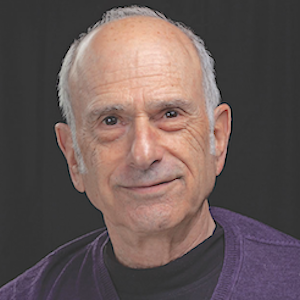
Physics and Mysticism with Fritjof Capra, Ph.D.

Product Description
$ 1.99

MP3 Download

This deep dialogue explores the parallels between modern physics and mysticism. Capra, a physicist influenced by Eastern mysticism, describes how high-energy physics and mystical traditions share similar concepts of unity, energy flow, and the interconnectedness of all things. He emphasizes the dynamic nature of the universe, where particles are not static but part of a cosmic dance. Capra highlights the limitations of scientific abstractions and the importance of direct experience. He also discusses the implications of these insights for science, technology, and society, advocating for a more holistic worldview. (hosted by Michael Toms, Will Noffke, & Dan Drasin)


Bio


Fritjof Capra, Ph.D., physicist and systems theorist, is a founding director of the Center for Ecoliteracy in Berkeley, California, which promotes ecology and systems thinking in primary and secondary education. He is on the faculty of Schumacher College, an international center for ecological studies in England, and frequently gives management seminars for top executives. 


Fritjof Capra’s books include: 

  • The Turning Point: Science, Society, and the Rising Culture (Simon & Schuster 1984)
  • Uncommon Wisdom: Conversations with Remarkable People (Fontana 1989)
  • The Web of Life: A New Scientific Understanding of Living Systems (Anchor Press 1997)
  • The Hidden Connections (Anchor 2004)
  • The Systems View of Life: A Unifying Vision (co-author Pier Luigi Luisi) (Cambridge University Press 2016)
  • Learning From Leonardo: Decoding the Notebooks of a Genius (Berrett-Koehler 2013)
  • Patterns of Connection: Essential Essays from Five Decades (High Road Books 2024)
  • The Tao of Physics (Shambhala 1975 Revised 2025) 

To learn more about the work of Fritjof Capra go to www.fritjofcapra.net.


Topics explored in this dialogue include:·  

  • What is the concept of the “void” in physics
  • Why it is important to understand the interconnectedness of the universe
  • How physics connects with biology and psychology
  • How physics is an extreme specialization of the rational mind and mysticism is an extreme specialization of the intuitive mind
  • How subatomic particles can sometimes appear as waves and other times as particles
  • What are the limitations of scientific theories
  • What is the importance of human consciousness in transforming the world
  • What are the parallels between Zen, Eastern mysticism, and modern physics
  • What is the concept of transmutation in physics, rather than the actual destruction of particles
  • How modern physics moves science from a fragmented, atomistic worldview to a more holistic, organic one
  • How Robert Oppenheimer’s quote on the paradoxical nature of quantum theory compares to the Buddha’s teachings
  • What is meant by the bootstrap view of science that says nature has to be understood through self-consistency and the world is an interconnected network
  • How physics explains things by approximation whereas mystics are interested in a total experience
  • How relativity theory posits space and time are inseparably linked


Host: Michael Toms, Will Noffke, Dan Drasin    Interview Date: 10/4/1976   Program Number: 1054